

We are outraged by the death of Mr. George Floyd.
University of Wisconsin–Madison graduate student Leslie Taylor spent four months in Arizona recently. Her research group needed her to lead commissioning and other hands-on work with the prototype Schwarzschild-Couder telescope (pSCT) at the Fred Lawrence Whipple Observatory on Mount Hopkins.
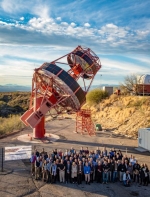
Scientists in the Cherenkov Telescope Array (CTA) consortium have detected gamma rays from the Crab Nebula using the prototype Schwarzschild-Couder Telescope (pSCT), proving the viability of the novel telescope design for use in gamma-ray astrophysics. The announcement was made today by Justin Vandenbroucke, associate professor at the University of Wisconsin–Madison, on behalf of the CTA Consortium at the virtual 236th meeting of the American Astronomical Society (AAS).
Some of WIPAC's computing resources are beingused to simulate protein folding of SARS-CoV-2, the coronavirus responsible for COVID-19. How proteins fold into three-dimensional shapes is difficult to predict but has big effects on biological interactions, like those between a virus and its host. These simulations will help researchers understand how the virus compromises human immune systems and reproduces.
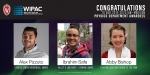
Every year, the University of Wisconsin–Madison Physics Department offers a number of awards to their undergraduate and graduate students, many of which are made possible through generous donations by alumni and friends of the department. This year, 14 students were presented with awards at a virtual ceremony on Thursday, May 7—including three graduate students who are part of the Wisconsin IceCube Particle Astrophysics Center (WIPAC).

WIPAC's number one priority has always been the health and safety of its employees, and our thoughts are with all those who are affected by the COVID-19 pandemic.
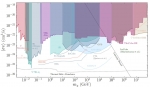
There are theories that say neutrinos—shy, lightweight fundamental particles—may provide the key to understanding dark matter. So a group of researchers—including some from the Wisconsin IceCube Particle Astrophysics Center (WIPAC), a research center of the University of Wisconsin–Madison—compiled and contextualized two decades of neutrino data looking for a connection to dark matter. They present a comprehensive set of limits on dark matter annihilation to neutrino pairs in a paper available on the preprint server arXiv.
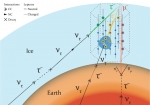
IceCube researchers at the Wisconsin IceCube Particle Astrophysics Center (WIPAC), a research center of the University of Wisconsin–Madison, recently found that IceCube is capable of seeing GZK neutrinos in a much larger portion of the sky than previously thought, thanks to an effect called tau neutrino regeneration. The researchers also used tau neutrino regeneration to eliminate a possible explanation for anomalous events detected by another Antarctic neutrino experiment, ANITA.
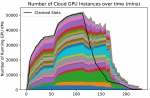
The San Diego Supercomputer Center (SDSC), an Organized Research Unit of UC San Diego; and the Wisconsin IceCube Particle Astrophysics Center (WIPAC) at the University of Wisconsin–Madison successfully completed a computational experiment as part of a multi-institution collaboration that marshalled all globally available for sale GPUs (graphics processing units) across Amazon Web Services, Microsoft Azure, and the Google Cloud Platform.