
There are
“WIPAC”
567
Friday, December 13, 2013 - 4:30pm
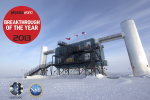
The IceCube project has been awarded the 2013 Breakthrough of the Year by the British magazine Physics World. The Antarctic observatory has been selected for making the first observation of cosmic neutrinos, but also for overcoming the many challenges of creating and operating a colossal detector deep under the ice at the South Pole.
Wednesday, April 18, 2012 - 12:00pm
In 1912, Austrian physicist Victor Hess was using balloons to measure radiation levels in the Earth’s atmosphere. His innovative and meticulous work required him to travel with the balloon up to altitudes of 5.3 km, monitoring the measuring equipment and checking data.
The danger of traveling to such heights paid off for Hess. Unexpectedly, he found higher levels of radiation as the balloon rose and concluded that radiation was penetrating the atmosphere from outer space.
Tuesday, January 7, 2014 - 2:15pm
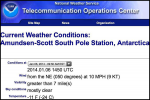
The polar vortex that has enveloped the Midwest has created an interesting scenario: temperatures in Wisconsin have dipped below those at the South Pole in Antarctica. At the South Pole, summer temperatures are often around -25 degrees Fahrenheit.
Thursday, January 30, 2014 - 12:30pm
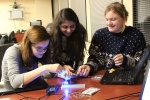
The WIPAC high school internship spring session begins today. Over twenty Madison-area students return to the program, a weekly meeting that exposes participants to physics, astronomy, and technology.
Monday, February 3, 2014 - 9:00am
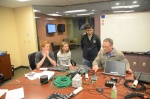
It’s not uncommon for teachers to take students on field trips. It gives the students hands-on experience and a chance to view classroom concepts firsthand. Madison-area teacher Juan Botella is about to take three students on the trip of a lifetime; the group is headed to Chile and then on to King George Island, Antarctica.
Tuesday, February 4, 2014 - 4:00pm
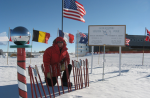
On most days, the South Pole in Antarctica is colder than Wisconsin. When the polar vortex descended on our state, temps dropped below those at the South Pole, giving us an opportunity to feel what it may be like to work at the end of the Earth.
Wednesday, February 12, 2014 - 6:30pm
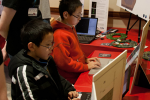
We’re excited to be part of the UW – Madison Physics Fair this year on Friday, February 15 from 11:00 am – 4:00 pm. It’s an annual event hosted by the Physics Department featuring hands-on activities for all ages...
Thursday, February 13, 2014 - 10:45am
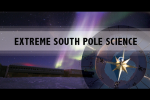
The community is invited to Extreme South Pole Science day focusing on the research being done with the IceCube telescope on Tuesday, Feb. 25, at the University of Wisconsin-Fond du Lac, 400 University Dr., Fond du Lac.

Monday, April 7, 2014 - 8:00am
The American Physical Society’s (APS) April Meeting 2014 is currently underway in Savannah, Georgia. The meeting, which began on Saturday, April 5th, and runs through Wednesday, April 8th, includes presentations from a number of researchers from the Wisconsin IceCube Particle Astrophysics Center (WIPAC).
Tuesday, April 8, 2014 - 9:45am
Located deep within the ice at the South Pole in Antarctica, the IceCube Neutrino Observatory watches for traces of the mysterious neutrino, a subatomic messenger from the cosmos that lends a greater understanding of far away events in the universe.